
 EN
EN
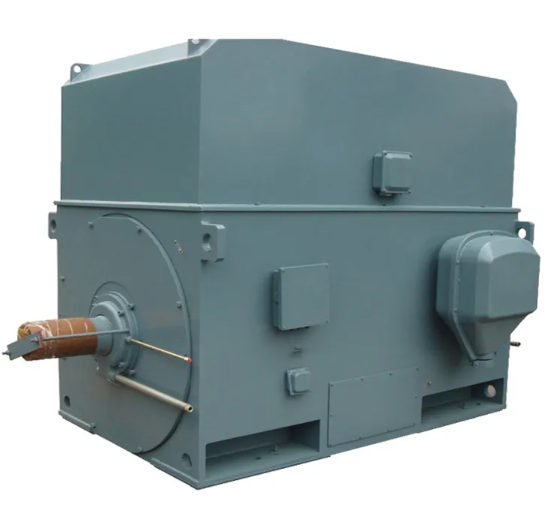
Understanding Three Phase Asynchronous Motors and Australian MEPS Framework
What Is a Three Phase Asynchronous Motor and Why It Matters for Energy Efficiency?
Three phase asynchronous motors work by turning electricity into mechanical power through a rotating magnetic field effect. The stator windings basically create currents in the rotor which then produces torque. Around 74 percent of all industrial equipment across Australia runs on these types of motors because they're straightforward to maintain, pretty reliable over time, and just plain more efficient than those single phase versions. What makes them stand out is this slip based operation that actually cuts down on wasted energy. That's why manufacturers need them if they want to meet MEPS requirements. These standards are part of Australian government efforts to get rid of older, less efficient motor models from factories and workshops nationwide.
Overview of Minimum Energy Performance Standards (MEPS) in Australia
Australia's MEPS program has set efficiency standards that follow the IEC 60034-30 guidelines, meaning any three phase induction motors over 0.75 kW need to hit at least IE3 efficiency levels starting from 2021. These rules fall under the Greenhouse and Energy Minimum Standards Act passed back in 2012, and they've actually cut down on industrial motor power usage by around 18% since 2016 according to Clean Energy Regulator data from last year. To check if equipment meets these requirements, manufacturers run tests based on AS/NZS 60034.2-1:2019 standards. These assessments look at how much energy gets lost when motors operate between 75% and full capacity loads, giving a realistic picture of their performance under normal working conditions.
Regulatory Scope: Coverage of Motors Above 0.75 kW Under MEPS
The Minimum Energy Performance Standard (MEPS) covers three phase asynchronous motors ranging between 0.75 kW and 375 kW power ratings. These motors find common applications in industrial equipment like pumps, compressors, and conveyor systems which together account for around 62% of all motor driven energy consumption across Australia. There are some exceptions though - mainly for special purpose motors designed for hazardous environments such as those rated explosion proof or intended for underwater operation. Looking at recent trends since implementation began in 2021, most new installations now meet the higher efficiency IE3 standard rather than the older IE1 models. The difference matters too because these outdated motors actually consume anywhere from 5 to 8 percent more electricity each year. Practical results back this up as well. One factory completed a retrofit project last year where they replaced their 22 kW IE1 motors with newer IE4 versions. The upgrade cut energy usage by about 23%, translating into roughly $740k saved on annual operating costs alone.
IE Efficiency Classifications and Compliance for Three Phase Asynchronous Motors
IE Efficiency Levels (IE1, IE2, IE3, IE4) According to IEC 60034-30
Three phase asynchronous motors are classified into four efficiency tiers under IEC 60034-30:
- IE1 (Standard Efficiency): Up to 15% energy loss at full load
- IE2 (High Efficiency): 7.5–10% losses; common in pre-2020 installations
- IE3 (Premium Efficiency): ≤6.5% losses; mandatory in Australia since 2021
- IE4 (Super Premium Efficiency): <4% losses; ideal for continuous-duty applications
Modern IE3-compliant motors achieve higher efficiency through precision winding, low-friction bearings, and advanced thermal management. A 2023 study found IE3 motors reduce energy use by 18% compared to equivalent IE2 models in pump systems.
Meeting the IE3 Minimum Standard: How Three Phase Asynchronous Motors Comply
Australian MEPS requires all applicable motors to meet IE3 efficiency or pair IE2 motors with variable speed drives (VSDs). Manufacturers ensure compliance by:
- Optimizing stator slot design to reduce copper losses by 22% versus IE2
- Using high-grade lamination steel to cut iron losses by 19% (ABMEC 2022)
- Integrating NEMA Premium®-equivalent cooling systems
Compliance is validated under AS/NZS 60034.2-1:2019, which measures total losses at 75–100% load. Motors exceeding 6.5% loss fail certification.
Older vs. Modern Motors: Efficiency Gains in Contemporary Three Phase Asynchronous Designs
Pre-2010 motors typically operated at IE1 efficiency, delivering 5–8% lower output than current IE3 models. A 2024 retrofit analysis highlights the improvement:
| Parameter | IE1 Motor (1990s) | IE3 Motor (2024) |
|---|---|---|
| Annual Energy Use | 85 MWh | 69 MWh |
| CO2 Emissions (t/yr) | 67.5 | 55.2 |
| Maintenance Costs | $3,200 | $1,750 |
Advances such as die-cast copper rotors reduce I²R losses by 4%, while adaptive insulation cuts partial discharge risks by 40% (EPRI 2023). One mineral processing plant achieved an 18% energy reduction after replacing 22 IE1 motors with IE3 units.
Australia’s MEPS Regulations: Evolution and Compliance Requirements
Historical Development of Motor Efficiency Standards Since 2001
In 2001, Australia rolled out its Mandatory Energy Performance Standards (MEPS), starting with three phase asynchronous motors rated over 0.75 kW. These standards didn't happen all at once though. The requirements gradually changed over time. By 2006, IE2 motors were the minimum standard required, and later on, things aligned with European Union regulations thanks to the Greenhouse and Energy Minimum Standards Act. Fast forward to 2019, and we saw a major shift when IE1 motors got phased out completely. Most applications now needed IE3 motors instead. This upgrade made a real difference too, slashing energy losses by around 60 percent when compared to what was available back before 2001.
Key Regulatory Updates Through 2021 and Alignment with AS/NZS 60034.2-1:2019
The 2021 update harmonized MEPS with AS/NZS 60034.2-1:2019, enhancing testing rigor for three phase asynchronous motors. Stricter torque-efficiency validation and mandatory certification through accredited bodies like NATA closed loopholes in partial-load reporting, ensuring declared IE3/IE4 performance holds across operating conditions.
Expanded Scope: Inclusion of Variable Speed Drives and Broader Power Ranges
Since 2023, MEPS covers motors from 0.75 kW to 1000 kW, including those integrated with variable speed drives (VSDs). This reflects that 71% of industrial motor systems require speed control (IEA 2022). Regulations now assess motor-drive combinations, encouraging integrated high-efficiency designs rather than standalone components.
Pathways to Compliance for Three Phase Asynchronous Motors in Australia
Testing and Certification Process for MEPS Approval
Any motor rated above 0.75 kW needs to go through proper testing at certified laboratories if it wants to satisfy minimum energy performance standards. When assessing how efficient these motors actually are, technicians follow the guidelines set out in AS/NZS 60034.2-1 from 2019, which works alongside the international IEC 60034-30 classification system. Meeting regulations means getting at least IE3 efficiency levels, something that has to be clearly shown in detailed technical documentation. Motor suppliers then take all those test results and send them off to groups such as the Energy Efficiency Council before they can even think about putting their products on store shelves anywhere. This whole process ensures that only motors meeting strict efficiency benchmarks make it into the marketplace.
Responsibilities of Suppliers and Importers in Ensuring Compliance
Importers and distributors are legally responsible for verifying MEPS compliance. Key obligations include:
- Retaining test certificates for seven years after sale
- Auditing supply chains for valid efficiency documentation
- Removing non-compliant motors within 60 days of identification
With penalties increased by 40% since 2021 (Clean Energy Regulator 2023), due diligence now includes real-time verification of IEC 60034-30 alignment before customs clearance.
Labeling, Documentation, and Traceability for Regulated Motors
Compliant three phase asynchronous motors must display:
| Requirement | Specification |
|---|---|
| Efficiency label | IE classification (minimum IE3) |
| Power output | Visible kW rating (±5% accuracy) |
| Manufacturer ID | Unique alphanumeric traceability code |
Digital manifests linking each motor to its test data must accompany commercial invoices, enabling regulators to verify compliance via Australia’s Online Certificate Approval System.
Market Transition and Industry Adoption of IE3-Compliant Three Phase Asynchronous Motors
Phase-Out of IE1 Motors After 2019 Regulatory Changes
The 2019 MEPS update banned IE1-class three phase asynchronous motors, aligning Australia with global efficiency trends. This eliminated 15–20% of legacy motors from industrial inventories, as many operated below 85% efficiency.
Cost-Benefit Analysis of Upgrading to IE3 or IE4 Motors
Upgrading from IE1 to IE3/IE4 motors typically yields payback periods of 1.5–3 years through energy savings:
| Metric | IE1 Motor (7.5 kW) | IE3 Motor (7.5 kW) |
|---|---|---|
| Efficiency | 84% | 90% |
| Annual Energy Cost | AUD $8,200 | AUD $7,300 |
Case Study: Industrial Retrofit Achieving 23% Energy Reduction
In 2023, a manufacturing facility replaced 42 IE1 motors with IE4 units, achieving 23% annual energy savings. The project reduced CO₂ emissions by 380 tonnes per year without compromising torque performance.
Trends and Incentives Driving Premium Efficiency Motor Adoption
Government rebates, such as those under the NSW Energy Savings Scheme, cover 20–35% of upgrade costs for IE3/IE4 motors. Concurrently, industrial IoT integration enables real-time load monitoring, helping operators maintain optimal performance within MEPS thresholds.
Table of Contents
- Understanding Three Phase Asynchronous Motors and Australian MEPS Framework
- IE Efficiency Classifications and Compliance for Three Phase Asynchronous Motors
- Australia’s MEPS Regulations: Evolution and Compliance Requirements
- Pathways to Compliance for Three Phase Asynchronous Motors in Australia
- Testing and Certification Process for MEPS Approval
- Market Transition and Industry Adoption of IE3-Compliant Three Phase Asynchronous Motors