
 EN
EN
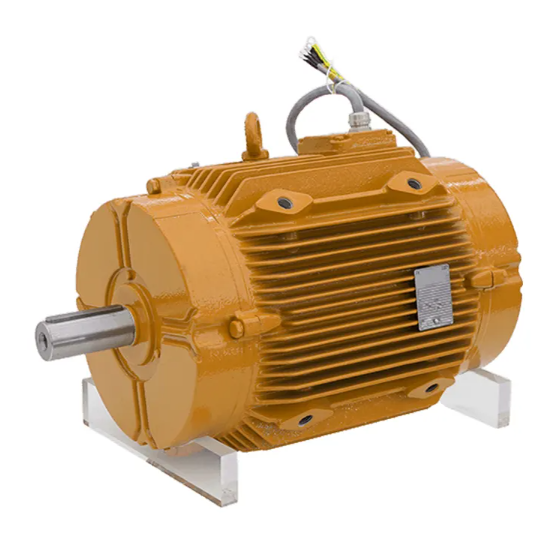
Clarifying Application Requirements for Special Application Motors
Mapping Duty Cycle, Environmental Conditions, and Precision Targets
Getting motor specs right starts by looking at three key factors that all affect each other: how often it runs, what kind of environment it faces, and exactly how precise the performance needs to be. Motors used continuously versus those running intermittently or only during peak demand need different thermal designs. Take steel mills as an example where motors work in heat well over 60 degrees Celsius sometimes reaching 140 Fahrenheit. These extreme conditions mean special cooling solutions are needed just to keep them working reliably. Then there's the matter of environment type. Corrosive settings, places with explosive risks marked ATEX Zone 1, or areas needing sterility all come with their own set of challenges regarding materials selection, proper sealing, and protective enclosures. The level of precision required varies quite a bit too. Medical lasers might need position accuracy down to 0.1 micrometers, whereas mining conveyor systems care more about handling twice their normal load capacity for short periods. Thermal issues still top the list for why industrial motors fail, making up around 38 percent of breakdowns according to IEEE data from 2022. That makes getting these basic parameters right absolutely essential before finalizing any motor specification.
Navigating Industry-Specific Compliance (e.g., ISO 13485, DO-160, ATEX)
Regulatory frameworks set strict engineering limits rather than being nice-to-have additions. Medical equipment needs to follow ISO 13485 guidelines for complete traceability and must be made from materials that won't cause reactions or release harmful substances. For aircraft components, engineers have to get certified under RTCA DO-160G Section 8 regarding vibrations. Petrochemical plants work under different rules altogether, specifically the ATEX Directive 2014/34/EU which requires special enclosures designed for areas where explosions could happen. Ships and boats typically depend on IEC 60092-301 standards to protect against saltwater damage over time. None of these regulations mix together either. Missing something like proper shock testing according to DO-160 or leaving out important paperwork for ATEX compliance can lead to entire projects getting rejected. According to recent studies by McKinsey from last year, about two thirds of all motor redesign efforts come down to problems found too late during compliance checks. That's why smart designers build regulatory requirements right into their first drafts instead of treating them as afterthoughts.
Electromagnetic Design Customization of Special Application Motors
Optimizing Pole/Slot Configuration, Torque Linearity, and Cogging Behavior
When it comes to electromagnetic optimization, the main goal is finding that sweet spot between torque linearity, smooth operation, and how responsive the system reacts dynamically. The right combination of poles and slots, especially when fractional slot windings are involved, can keep torque deviations within about plus or minus 2% even as loads change. This matters a lot in applications like surgical robots where precision counts or in semiconductor manufacturing equipment. Cogging torque remains a real problem because it causes those annoying little pulses and positioning errors. Most engineers know that keeping this below 5% of rated torque requires several tricks in the toolbox. Skewing rotor laminations helps break up the magnetic symmetry, while shaping poles asymmetrically makes those flux transitions smoother. And let's not forget about those drive algorithms that inject harmonics to cancel out whatever torque ripple remains after all that. These approaches really make a difference in eliminating vibrations that would otherwise mess up measurements in instruments where microns matter, all while still maintaining good efficiency levels and bandwidth performance.
Stator-Rotor Stack Engineering for High Torque Density and Compact Footprint
Getting torque densities over 15 Nm per kg really requires thinking about electromagnetics and mechanics together from day one, not just making small improvements here and there. The ultra thin silicon steel laminations at 0.2 mm thickness reduce core losses around 30% compared to regular materials. And those V shaped IPM rotors inside actually work with both magnetic forces and mechanical resistance to create better performance. Then there are these Halbach array arrangements that pack more magnetic power into the air gap area, which makes everything run stronger. For aerospace applications where space is tight, going frameless with direct drive setups eliminates all those extra parts like couplings and gearboxes completely. This approach hits nearly 98% efficiency in many cases. Looking at our test results shows pretty clearly that when we optimize all these factors properly, we see real improvements across every important measurement category.
| Design Parameter | Standard Motor | Optimized Special Motor |
|---|---|---|
| Torque Density (Nm/L) | 8–12 | 18–22 |
| Stack Length Efficiency | 1× | 1.8× |
| Continuous Torque at 40°C | 100% | 140% |
Thermal integration is built-in–not bolted-on: copper cooling channels embedded directly into the stator back-iron sustain high continuous torque in compact envelopes.
Mechanical and Thermal Adaptations for Special Application Motors
Custom Shaft Geometry, Mounting Interfaces, and Frameless Integration Options
When it comes to mechanical integration, form follows function rather than following standard specs. Engineers often specify custom shaft sizes, keyway configurations, and tolerance stackups to prevent premature bearing failure caused by misalignment issues. At the same time, components featuring ISO flanges or NEMA compatible mounts work right out of the box with older machinery. Take frameless motors for instance. These designs integrate the rotor directly into whatever part needs to move, cutting down on overall length by around 40%. That makes them a must have for tight spaces like robotic joints and spacecraft mechanisms where every millimeter counts. Before any actual parts get made, though, all these mechanical tweaks go through rigorous finite element analysis. This checks how stress spreads across materials, measures potential bending, and predicts lifespan when subjected to extreme conditions. Only after passing these tests does machining even begin.
Thermal Management Strategies and High-Performance Material Selection
Keeping things cool matters a lot for long term performance. When temperatures go over 150 degrees Celsius, insulation life drops by half according to IEEE standards from 2001. That's why different applications need different cooling approaches. For regular automation work, forced air channels do the trick. Heavy duty servos running all day need liquid cooled stator jackets though. And when there are sudden power spikes, phase change materials help absorb those peaks. Choosing the right materials makes all the difference too. Ceramic coated windings can handle heat up to 200 degrees while still maintaining their electrical properties. Samarium cobalt magnets are pretty tough stuff, resisting demagnetization even at 350 degrees. These materials are especially important in extreme environments like oil well drilling equipment or industrial furnaces where temperature control is absolutely essential.
Integration and Validation of Customized Special Application Motors
Validation isn't just another box to tick off at the end of development but rather a crucial step in the process. It makes sure all those electromagnetic, mechanical, and thermal changes actually work together when put into real world conditions. The testing itself has pretty strict guidelines mapped out for each specific application. We look at how things perform under realistic loads first, then subject components to environmental stresses like temperature swings, humidity levels, and vibrations according to standards such as DO-160. Accelerated life tests are run too, basically fast forwarding through what would normally take years of operation. Thermal imaging helps spot hotspots while analyzing noise patterns and mapping efficiency gives us insight beyond what's listed in standard specifications. This extra layer ensures safety factors stay well above minimum requirements for mission critical systems. According to McKinsey research from 2023, going through this iterative improvement cycle cuts down field failures by around 40%. Before giving final approval though, we need proof of stable performance across at least 500 operating hours plus any required third party certifications if applicable. Only then does the motor move from being a tested prototype to something ready for actual production use.