
 EN
EN
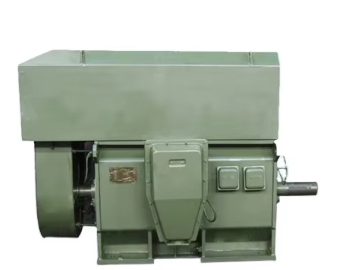
Site Preparation and Foundation Design for Large Synchronous Motor Stability
Load-Bearing Foundation Requirements to Prevent Resonance and Settlement
For large synchronous motors to run properly, they need a solid base that can handle not just the static weight but also those tricky dynamic forces from harmonics. The foundation needs to support over 50 tons of static load plus all those moving parts creating vibrations. When designing these systems, engineers have to think about both the sheer weight of the equipment and how it vibrates during operation. If they don't watch out for resonance frequencies, bearings will wear out much faster than expected. Before pouring any concrete, soil tests tell us what kind of load the ground can actually take. Poor compaction? That leads to problems where different parts settle at different rates, which gets really bad when the difference goes past 0.1 mm per meter. This kind of uneven settling causes shaft misalignment issues down the road. Most installations use reinforced concrete bases that are about 1.5 times bigger than the motor itself, with special pads added to absorb vibrations. In areas prone to earthquakes, steel pilings go down about 30% deeper than frost lines to keep things stable. And let's not forget thermal expansion joints either. These little guys allow for seasonal ground movement without throwing everything out of alignment, keeping vibrations within acceptable ranges according to ISO 10816-3 standards.
Mounting Strategy Selection: Rigid, Flanged, or Resilient—Impact on Vibration and Alignment
How equipment is mounted makes a big difference when it comes to controlling vibrations and how often maintenance needs to happen. For smaller motors below 1000 kW in areas where there isn't much shaking going on, rigid mounts work great to keep things stable. But watch out because these same mounts can actually make those annoying high frequency vibrations worse. Flanged mount designs are really good for getting couplings aligned properly in tight spots, which saves space. The catch? They need super flat mounting surfaces, sometimes as flat as 0.05 mm across the whole area. When we talk about resilient systems with rubber isolators, they cut down on vibration levels quite a bit according to ISO 1940 standards. These can knock vibrations down between 60 to 80 percent, which is why many plants prefer them for machines that run at varying speeds. There's a downside though. These resilient setups need checking more regularly when temperatures change throughout the day. Important considerations include what happens with torque when starting up, how heat affects the rubber materials over time, and whether technicians can easily access the equipment for laser alignment checks. While resilient mounts do help prolong bearing life by about 25% in situations with heavy inertia loads, operators should be prepared to perform soft foot checks roughly 30% more frequently compared to their rigid counterparts.
Precision Mechanical Installation of the Large Synchronous Motor
Laser Alignment Best Practices for Shaft Coupling and Runout Tolerance Control
Getting things aligned properly makes all the difference when it comes to extending how long motors last. Modern laser alignment tools can hit around 0.05 mm tolerance on connected shafts. And let's face it, even a tiny bit off at 0.1 mm means bearings start wearing down three times faster according to recent studies from Machinery Lubrication. Most shops follow a basic three step routine these days. First they check the foundation before doing any alignment work. Then comes the actual laser monitoring while everything spins. Finally there's that important check after tensioning has been applied but before full operation starts. Experience shows this method cuts down early failures by about two thirds over old school manual techniques. Plus it stops those nasty vibration problems that can tear equipment apart over time.
Thermal Growth Compensation and Bearing Load Verification During Final Positioning
Proper management of thermal expansion is essential when installing equipment. For steel shafts specifically, they tend to grow about 1.2mm per meter whenever temperatures climb by 100 degrees Celsius. This means technicians need to build in those cold alignment offsets from the start. Meanwhile, strain gauges help check that bearing loads don't drift beyond 15% of what was originally designed for them. The numbers tell a story here too - according to Rotating Equipment Journal from last year, around 42% of unexpected system shutdowns happen because someone forgot about these thermal shifts. When setting everything in place at the end, good practice involves looking at how things change from room temperature to operating conditions, tracking where loads actually go versus what was planned, and making those fine adjustments with shims to keep everything running smoothly both axially and radially.
Electrical Commissioning and Grid Synchronization of the Large Synchronous Motor
Excitation System Integration and Voltage/Frequency Matching Protocols
The excitation system plays a key role in managing reactive power and keeping terminal voltages stable across the network. Maintaining rotor field current within about half a percent tolerance is critical to avoid problems like magnetic saturation or those pesky under-excitation faults that can bring operations to a halt. When connecting to the grid, getting the voltage right matters a lot too it needs to be within quarter of a percent difference from the bus voltage, while frequencies should stay aligned within 0.1 Hz range to prevent those damaging torque spikes during startup. Today's modern systems rely on closed loop control schemes paired with vector sensors that constantly watch those phase angles, making automatic adjustments to both excitation levels and prime mover speeds as needed. Manual syncing remains risky business remember when there's even a 15 degree phase angle mismatch? That kind of misalignment can create transient currents that spike over five times normal levels. Thermal imaging studies have shown what happens when things go wrong improper voltage and frequency matching will wear down insulation materials at three times the normal rate within just 2,000 operating hours. The good news is automated synchronization cuts commissioning mistakes down by nearly 92% and keeps those annoying harmonics well within the boundaries set by IEEE 519-2022 standards.
Key synchronization parameters:
| Parameter | Tolerance Threshold | Impact of Deviation |
|---|---|---|
| Voltage | ±0.25% | Winding stress & torque pulsation |
| Frequency | ±0.1 Hz | Rotor oscillation & bearing wear |
| Phase Angle | <5° | Short-circuit currents >500% FLA |
Synchronization initiates only after three consecutive validation cycles confirm parameter alignment, preventing out-of-phase closures that could cause catastrophic mechanical damage. This ensures smooth transition from isolated to grid-parallel operation while maintaining power factor within ±0.01 of the target.
Thermal Management and Cooling System Integration for Optimal Large Synchronous Motor Performance
Cooling Method Selection: Air, Hydrogen, or Water—Based on Rating, Duty Cycle, and Ambient Conditions
Good cooling makes all the difference when it comes to how well something works and how long it lasts. For smaller motors, those under about 20 megawatts, air cooling tends to be the most economical choice in places with normal weather conditions. These systems rely on regular air movement through specially designed channels. But they just don't cut it for machines running nonstop at full capacity. Hydrogen cooling takes things to another level entirely. It conducts heat away from equipment around fourteen times better than regular air does. That's why we see this method used mostly in big industrial motors producing over fifty megawatts of power. The extra effort needed to contain hydrogen gas pays off because these systems experience far fewer energy losses from friction. When dealing with extremely dense operations such as steel production facilities, water based cooling loops become necessary. They handle massive amounts of heat buildup, sometimes exceeding 100 kilowatts per cubic meter, yet manage to keep internal temperatures low enough to prevent damage to components, typically staying under 130 degrees Celsius. Choosing the right cooling approach really boils down to several important considerations including...
- Motor Rating: Water cooling is typically required above 60 MW
- Duty Cycle: Hydrogen systems perform best in continuous 24/7 operations
- Ambient Conditions: Air cooling is viable below 40°C with adequate ventilation
Engineers must balance initial costs with long-term thermal performance, as every 10°C above rated temperature can halve insulation life. Increasingly, hybrid solutions such as air-to-water heat exchangers are adopted to optimize performance and maintenance access in space-constrained industrial settings.
Table of Contents
- Site Preparation and Foundation Design for Large Synchronous Motor Stability
- Precision Mechanical Installation of the Large Synchronous Motor
- Electrical Commissioning and Grid Synchronization of the Large Synchronous Motor
- Thermal Management and Cooling System Integration for Optimal Large Synchronous Motor Performance