
 EN
EN
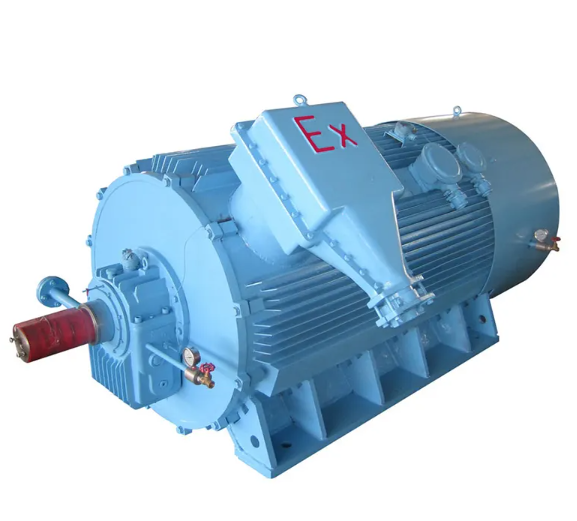
Explosive and Hazardous Environments Require Explosion-Proof Special Application Motors
Principle: Intrinsic Safety and Enclosure Standards (ATEX, IECEx, NEC Class I/II)
When motors run in areas where there are flammable gases, vapors, or combustible dust around, they need special protection against sparks that could start fires. The basic idea is simple but critical: keep all electrical and heat energy well below what might actually cause an explosion, and make sure any potential sparks stay contained within specially designed enclosures. Around the world, organizations like ATEX (which stands for ATmosphere EXplosibles), IECEx, and the NEC's Class I and II systems set out exactly what kind of safety measures are needed depending on the specific hazards present. Class I deals mainly with those pesky flammable gases we mentioned earlier, whereas Class II focuses on situations involving combustible dust particles. These protective enclosures don't just sit there looking pretty either. They undergo intense testing to handle internal explosions at pressures up to 1.5 times normal levels before safely releasing the cooled gases outside. And let's not forget the consequences of getting this wrong. Motors that don't meet these standards create serious dangers. In fact, faulty installations were responsible for about 37 percent of all refinery explosions last year according to data from Safety Journal 2022.
Case Study: Oil Refinery Conveyors Using Flameproof (Ex d) Induction Motors with IP66/IP68 Ratings
An oil refinery on the Gulf Coast recently swapped out regular motors for flameproof (Ex d) induction models in their crude oil conveyor system. The heavy duty cast iron casings keep those dangerous electrical sparks contained inside, and they've got these IP66 and IP68 ratings that basically mean nothing gets into them from dust or water even when conditions get rough along the coast. Since making this switch, there haven't been any problems with motor fires or explosions, even though the place runs hot sometimes reaching around 140 degrees Fahrenheit. What really matters here is that these new motors don't spark because of their brushless design. That's super important for areas classified as Class I Division 1 where explosive gases hang around more than 15% of the time workers are on site.
Trend: Integration of Smart Sensors in Hazardous-Motor Enclosures for Real-Time Temperature & Gas Leak Monitoring
Explosion proof motors these days come with built in IoT sensors inside their housings for tracking temperature and gas levels on the fly. The sensors pick up when bearings get hotter than 150 degrees Celsius or when hydrogen sulfide reaches just 10 parts per million. They send all this info through special circuits designed to work safely in hazardous areas straight to control panels that can shut things down automatically if needed. One big chemical facility saw a pretty impressive drop in unexpected stoppages after installing these sensors last year about 43 percent less downtime overall. Looking ahead, manufacturers are working on ways to analyze how motors vibrate to spot potential seal problems before they occur, especially important in places where chemicals eat away at equipment or where conditions are really tough on machinery. This kind of advance helps keep workers safer while also making sure production keeps running smoothly.
Precision Control Demands Special Application Motors with Sub-Micron Accuracy
Challenges: Backlash, Resonance, and Quantization Errors in Open-Loop vs. Closed-Loop Systems
Getting down to sub-micron levels of precision really shows what's wrong with traditional motion systems. When machines change direction, mechanical backlash causes them to drift off course. At certain frequencies, resonance gets worse and makes vibrations bigger instead of smaller, which messes up the actual path the machine follows. Feedback devices have their own problems too - they create these stair-step like movements instead of the smooth motion we need for fine work. Open loop systems just keep building up errors because there's no way to fix them, while closed loop ones struggle to stay stable when trying too hard to correct mistakes. All this matters a lot in semiconductor manufacturing where tolerances need to be within plus or minus 0.1 microns. A company in the business actually saw their production drop by 37% last year because wafers kept getting misaligned from those pesky resonances nobody expected.
Solution: Hybrid Stepper + Encoder + Field-Oriented Control (FOC) for Semiconductor Wafer Handling
Special application motors tackle these problems by combining several technologies together - think hybrid stepper motors, those fancy high resolution encoders, and something called field oriented control or FOC for short. The hybrid steppers pack quite a punch when it comes to torque, which is basically how much turning force they can generate. And these encoders? Well, they have this impressive count of 512 thousand points, letting them measure positions as fine as 0.045 micrometers. What makes this whole setup work so well is the way FOC constantly tweaks the magnetic fields inside the motor. This helps eliminate annoying vibrations and keeps everything moving smoothly without any jerky stops or starts. When all these components come together, what we get is...
- Backlash elimination via direct-drive coupling, removing mechanical transmission components
- Sub-micron repeatability with real-time position verification
- Adaptive damping that neutralizes vibrations within 2ms
In semiconductor wafer handling robots, the system maintains ±0.08µm accuracy during high-speed transfers. Eliminating gearboxes reduces mechanical failure rates by 63% compared to traditional servo systems. Integrated thermal drift compensation further ensures long-term stability across variable production cycles.
Extreme Environmental Conditions Drive Custom Engineering in Special Application Motors
Thermal and Material Challenges: Magnet Stability from −40°C to +150°C and Corrosion-Resistant Alloys
Motors need special engineering when they operate in harsh conditions where temperature extremes and chemicals are common problems. Regular permanent magnets start losing strength around 150 degrees Celsius, dropping about 15% in flux density. They also get brittle when temps drop below minus 20 degrees, as reported in the Journal of Magnetism last year. That's why high performance motors often incorporate either samarium cobalt magnets or specially treated neodymium versions that hold up better. For corrosion issues, offshore drilling equipment typically has stainless steel casings, sometimes reinforced with marine grade aluminum parts and nickel copper seals against sulfur damage. Look at geothermal sites where acidity levels can fall below pH 3.0. Ceramic coated windings have become standard there because they not only resist acids but conduct heat well too, making sure these motors keep running even when exposed to aggressive chemical environments day after day.
Trade-Off: High-Efficiency SynRMs and the Shift from Air Cooling to Sealed Oil Immersion
SynRMs can hit around 98% efficiency even when things get really hot, though they tend to produce so much concentrated heat that regular air cooling just doesn't cut it anymore. That's why many operators have started switching to sealed oil immersion systems. These systems let special dielectric fluids run through the motor cavities at about 5 liters per minute, which boosts thermal handling capabilities roughly three times what forced air can manage. But there are some downsides too. Cold weather operation requires synthetic oils that stay liquid down to -40 degrees Celsius, otherwise everything gets too thick to work properly. The fluid contact also creates extra drag on the rotor, cutting torque output somewhere between 8 and 12 percent. Plus those sealed bearing chambers mean more complicated maintenance routines. Fortunately, advances in computational fluid dynamics are helping engineers design better internal baffles. This allows heavy machinery used in desert mining operations to keep running non-stop even when ambient temps reach 60 degrees Celsius without needing to reduce power output.
High-Torque, Low-Speed Applications Favor Direct-Drive Special Application Motors
Advantage: Gearbox Elimination in Extruders and Wind Turbine Pitch Control for Improved Reliability
Special application direct drive motors get rid of those mechanical gearboxes when dealing with high torque at low speeds, which makes the whole system much more reliable. Getting rid of gears and couplings that often break down cuts down on maintenance time for things like extrusion systems. Wind turbines need this kind of setup too. The pitch control systems benefit from direct drive units because they provide solid torque without all those extra parts between motor and load. This works great even when conditions are tough out there in the field. With fewer moving parts overall, there's less energy wasted along the way, better efficiency numbers, and longer time between services. For anyone needing steady power delivery at lower speeds, direct drive tech has become pretty much standard now across many industries.