
 EN
EN
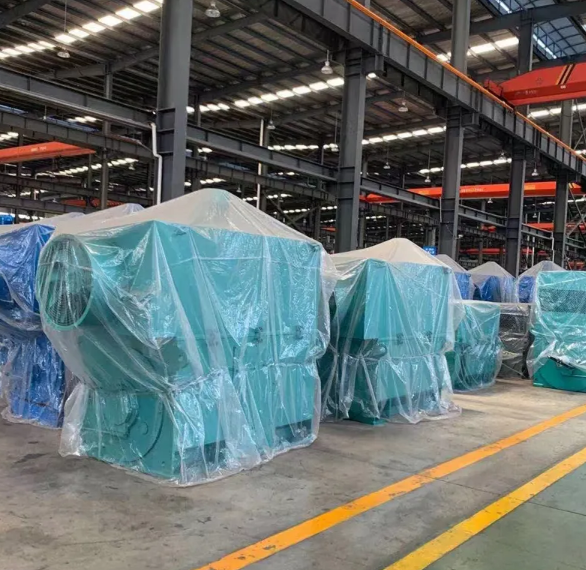
Power Generation and Grid Stability: Enabling Precision and Reactive Power Control
Phenomenon: Synchronous motors as grid synchronized inertia sources
AC synchronous motors naturally synchronize with the grid frequency, giving them a kind of rotational inertia that actually helps keep power networks stable when there are sudden changes in load demand. The mass of these motors' rotors acts like a flywheel, storing kinetic energy that gets released automatically whenever there's a dip in frequency. This basically slows down how quickly things change in the system, which supports overall grid stability. As more and more electricity systems around the world move toward renewables and away from traditional spinning generators, this kind of built-in inertia becomes really important. Without those old fashioned rotating machines, modern grids just don't have the same natural stabilizing effect anymore.
Principle: Rotor excitation for precise power factor correction and reactive power support
Unlike induction motors, synchronous motors offer dynamic reactive power control through adjustable DC rotor excitation. By fine-tuning excitation current, operators can:
- Achieve unity power factor, avoiding utility penalties that can exceed $740,000 annually per facility
- Inject or absorb reactive power (VARs) to regulate voltage during peak demand
- Offset lagging VARs from transformers and transmission infrastructure
This transforms motors into programmable grid assets that improve transmission efficiency and help prevent voltage collapse, especially in weak or remote grids.
Oil, Gas, and Chemical Processing: High-Efficiency, Constant-Speed Operation for Critical Applications
Phenomenon: Eliminating slip losses in centrifugal compressors and pumps
Centrifugal compressors and pumps used in hydrocarbon processing have traditionally lost around 3 to maybe 7 percent of their input energy because of those annoying slip losses in regular induction motors. AC synchronous motors fix this problem since they keep the rotor and stator perfectly synced up throughout operation, which gets them into the IE4 efficiency class according to those IEC standards from 20034 something or other. Recent studies published last year in fluid dynamics journals suggest these motors can cut down energy usage by as much as 40% when applied to gas compression systems. That means real money savings on operational costs and fewer carbon emissions without sacrificing performance, especially important when dealing with those unpredictable pressure changes that happen all the time in pipelines.
Principle: Stable flow rates under variable inlet conditions with AC synchronous motor drives
Synchronous motors keep their rotational speed pretty much constant when dealing with crude oil that varies in viscosity or handling reactive chemicals. These motors stay within about half a percent of the target speed even when there are changes in load conditions. What makes them stand out is how their electromagnetic system reacts immediately to shifts in inlet pressure. This quick response stops those annoying flow disruptions that might cause different phases to separate in pipelines carrying multiple substances. For booster pumps working with sour gas, this results in around two percent consistency in flow rates. And let's face it, that kind of stability matters a lot because unplanned shutdowns cost millions at refineries where they process all sorts of corrosive materials daily.
HVAC and Large Scale Building Systems: Meeting Energy Standards with IE4 Efficiency
Phenomenon: Adoption of AC synchronous motors in VFD-controlled chillers and damper systems
More engineers these days are going with AC synchronous motors for big HVAC systems like those VFD controlled chillers and damper actuators we see everywhere. What makes these motors stand out is their ability to maintain accurate speed control even when running at lower RPMs. This means the cooling system can adjust smoothly without those annoying surges that happen with other motor types. And let's not forget about the energy savings part either. Induction motors usually waste around 3 to 7 percent of energy when they're not operating at full capacity, but synchronous motors cut down on that loss significantly. Take air handling units for instance. When equipped with synchronous motors, these systems experience about 22 percent fewer duct pressure fluctuations according to a study published in the ASHRAE Journal last year. The result? Much steadier airflow throughout buildings and people actually feeling more comfortable in their spaces.
Trend: ASHRAE 90.1-2022 driving retrofits from induction to IE4-class synchronous motors
The updated ASHRAE 90.1-2022 standard requires 15% higher efficiency for commercial HVAC drives, accelerating the replacement of legacy induction motors. IE4-class AC synchronous motors meet this mandate through:
- Permanent magnet rotors that eliminate rotor losses
- 97% peak efficiency at 25% load, compared to 89% for induction equivalents
- Power factor exceeding 0.95 across a wide speed range
Facility managers report payback periods of just 18 months after retrofitting, as these motors reduce chiller plant energy use by 31% annuallyâsupporting compliance with ventilation codes and global net-zero initiatives.
Marine and Shipboard Applications: Reliable Propulsion with Permanent-Magnet Synchronous Motors
Strategy: Integrating PMSMs in hybrid-electric marine propulsion for efficiency and durability
Marine propulsion is getting a makeover thanks to Permanent-Magnet Synchronous Motors (PMSMs) finding their way into hybrid-electric systems on ships. When these replace traditional induction motors in ship drivetrains, they cut out those annoying slip losses and hit efficiency levels well over 95% in most cases. The result? A noticeable drop in fuel consumption during extended sea journeys. Another big plus for PMSMs is their brushless construction which means fewer parts to maintain, especially important when dealing with salty seawater corrosion problems. Plus, the ability to finely tune torque makes switching back and forth between electric power and diesel engines much smoother than before. We've seen this work particularly well in offshore support vessels operating around oil rigs. Even though these motors face constant vibrations from engine operation, deal with high humidity levels, and must function across extreme temperature ranges from Arctic waters to tropical climates, they keep running without fail.
Advantage: High torque density and resilience in harsh maritime environments
Permanent magnet synchronous motors (PMSMs) can generate around 30% more startup thrust compared to other motors of similar size because they're built with compact designs that produce high torque. The neodymium magnets inside these motors handle shock loads really well when ships encounter rough ocean conditions. Plus, the motors come with special coatings that resist corrosion, which protects them from salt air and moisture that would normally eat away at regular motor components over time. For this reason, PMSMs work exceptionally well in azimuth thrusters and dynamic positioning systems on vessels. When a ship needs to maintain position or maneuver precisely in challenging environments, having reliable motors that won't let go during critical moments makes all the difference between successful operations and potential disasters at sea.
Table of Contents
- Power Generation and Grid Stability: Enabling Precision and Reactive Power Control
- Oil, Gas, and Chemical Processing: High-Efficiency, Constant-Speed Operation for Critical Applications
- HVAC and Large Scale Building Systems: Meeting Energy Standards with IE4 Efficiency
- Marine and Shipboard Applications: Reliable Propulsion with Permanent-Magnet Synchronous Motors